
Discussing poetry and my latest, “Listening to Mars.”
by Sally Ashton

“Zero Gravity” and “Coda,” forthcoming from my new book, Listening to Mars, Cornerstone Press, February 2024.
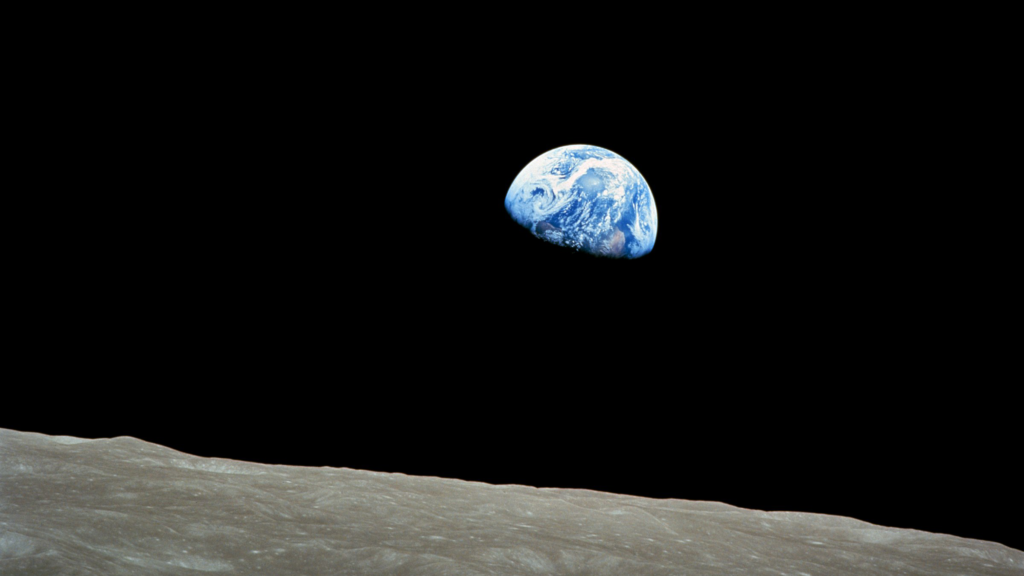
Photo credit, NASA.
I LOVE short forms. I write short forms. I read short forms. I teach short forms. While standing at 5’ 6” I don’t necessarily have a short form, you can still call me a short-form sort of writer. At least sometimes.
Prose poems are one type of short form. Other shorts fall in the broad sub-genre categories of flash fiction or brief nonfiction. Brevity—500 words or less in our case—is the most common attribute of the various short forms, necessitating the art of omission. These brief pieces have much in common, and often the genre walls seem so thin, even fluid, that one might have the impression that there’s no substantive difference between them at all.
We also recognize that writing short forms enlarges the possible places to submit such work, possibly increasing chances of publication. I’ve successfully done so myself, leaving it to a journal’s editorial team to determine if a narrative-driven prose poem or a surrealistic flash or a list-style lyric essay will suit. The art of blurring boundaries—sfumato in a painting—is one of the freedoms contemporary writing affords. Genre boundaries can be breached.
That said, as a journal currently focusing specifically on the prose poem, DMQ Review turns down many well-written submissions based on our sensibility of what a prose poem is and what we perceive to be its essential differences from flash fiction and nonfiction. Scroll down to my column here from our first all-prose poem issue where I make a general introduction to a definition and list suggested reading. Please look here for a Part 2, more-poetic take on our vision of the prose poem. And, with four all-prose poem issues now available, reading what we publish is an instructive way to flesh-out what we look for.
In teaching short forms, I emphasize memoir as fealty to fact or memory—what actually happened—vs fealty to what’s happening, could happen, should happen in the poem. Flash fiction’s loyalty is to story, a plot and a character in it. As editors, we ask whether a submission allows some entry/exit from the real or from narrative through poetry’s power of imagery/symbol/metaphor, poetry’s capacity for slippage and “extra meaning,” for surprise, maybe even for wonder. What is the intention of your piece?
Think of traditional line break as one way for a poem to disrupt and open linear thought to gaps and surprising intimations, to create felt thought vs rational logic. A prose poem must create similar disruption but within a prose line. This puts extra pressure on language, syntax, and the creative endeavor itself.
Such attempts at delineation may very well “dwell in sfumato,” as the late poet Mary Lou Taylor said of herself. But that’s where you’ll find us at the DMQ Review, reading your submissions, finding our way, looking for poems that offer such possibility and surprise.
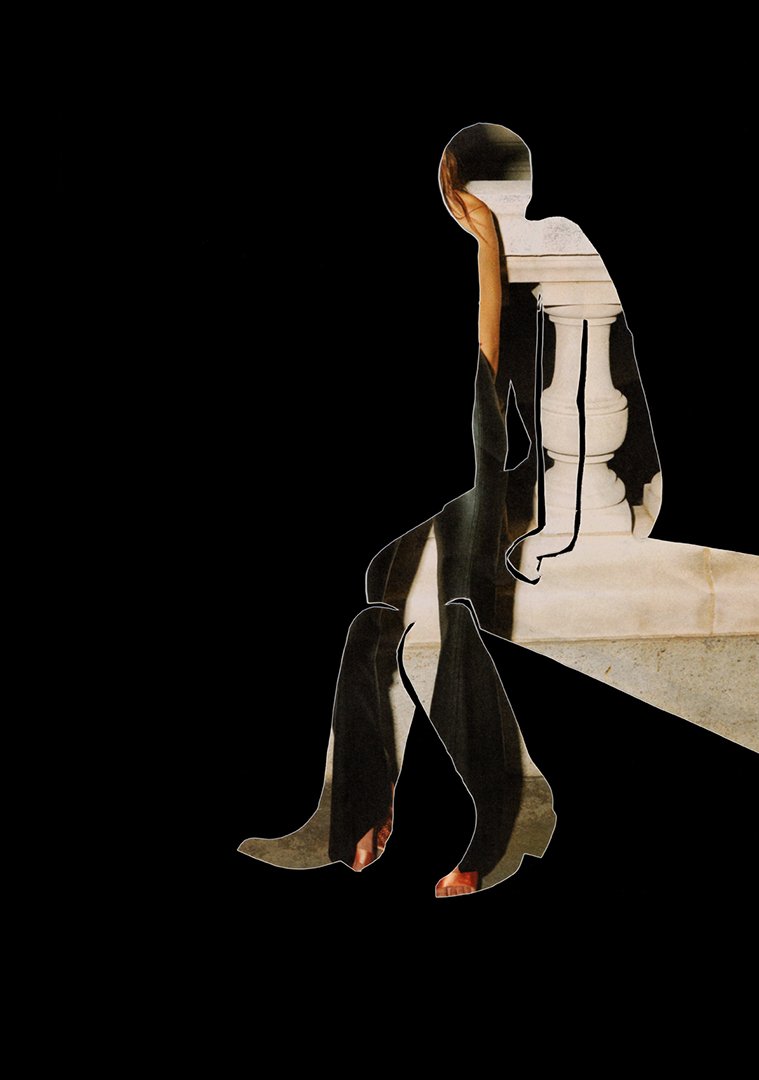
We think you’ll agree we found our way to some excellent work for the Summer 2023 Issue thanks to our talented contributors. We give a special shout-out to featured artist Kathryn Dunlevie whose fantastical images blur the visual line between the real and the imagined in a most visceral and exciting manner.
Finally, I’m thrilled that our website’s Squarespace platform now includes the left-right justification option allowing us to present these prose poems in the satisfyingly boxy shape indicative of prose poetry. Hooray!
A Sunday morning guilty pleasure: to retrieve my home-delivered copy of the Sunday New York Times from the driveway, listen for a minute to the early morning bird chatter before I head inside, hit the coffee maker, pour a bowl of cereal, and plop down at the kitchen table to sort the newspaper into its separate sections—or slices, as a friend deliciously calls them—to lose myself for a couple hours in its pages. Guilty because it’s likely more environmentally sound to forsake newsprint for an online version, which I’ve already done with great reluctance with the daily local news. Pleasure because that’s what reading is.
I start with the front page, reading, skimming, skipping, turning actual pages of analog text, ink upon paper, an ancient human practice, and how I found my father engaged every morning of my childhood—dressed in his robe, pajamaed legs crossed, with his own cup of coffee and probably a cigarette. I’ve got a pen. Sometimes I make notes in margins or snap a picture of some bit of quote that strikes my interest or seems resonant with something I’m writing or thinking about writing . . . which brings me to this morning’s Opinion slice and a column there by David Brooks entitled, “The Power of Art in a Political Age.”
Politics is Brooks’ lane, so I was curious to see what he’d have to say about mine. He makes a case for the arts—not just for poetry, but all forms—as a place, a place to “flee to,” a “deeper realm,” where one can find solace, inspiration, and feel you’ve entered an “alternative world” where you will “lose yourself.” While Brooks doesn’t plainly state this the way I have, art as a place, his figurative language definitely leans into the concept, one I do find very intriguing. Which is why I actually snipped this particular article out of the paper. Even the words you’re reading now are “from the Ether,” another imagined, digitized, but somehow real place from which I write to you.
But how his article informs this column, though tangential to Brooks’ piece, reflects how my mind works, ping-ponging around what I’m reading in that, yes, “deeper realm” of the imagination. What triggered my thoughts is his comment, beauty here conflated with art:
“First, beauty impels us to pay a certain kind of attention. It startles
you and prompts you to cast off the self-centered tendency to always
be imposing your opinion on things.”
Imposing opinion. Exactly. But while Brooks wants the in-our-case-reader to cast off this tendency, I think that to create beauty, to create art, the poet herself must also resist imposing opinion. Instead, a good poem exposes something of value, discovers something. The poet works to peel back layers, to reveal something formerly hidden, hidden even to the poet. Such a work invites the reader to participate, draws the reader into its quest. Poetry as art exposes the unknown vs. imposes a known, often a tired known. (Sounds like show vs tell, doesn’t it?)
An essay tries to tell you something. Maybe convince you. Yes, this one, too. A poem, on the other hand, a good poem, asks you something, exposes a way to that place Brooks imagines, that place where even for a moment, we might lose ourselves in time and space.
In our Spring 2022 issue of DMQ Review, we offer you pages of images and poems we think will do just that. We hope you will pay a certain kind of attention, as Brooks suggests, and find yourself startled and awakened and comforted and challenged and surprised and known. Transported. All of the ways art has of moving us.
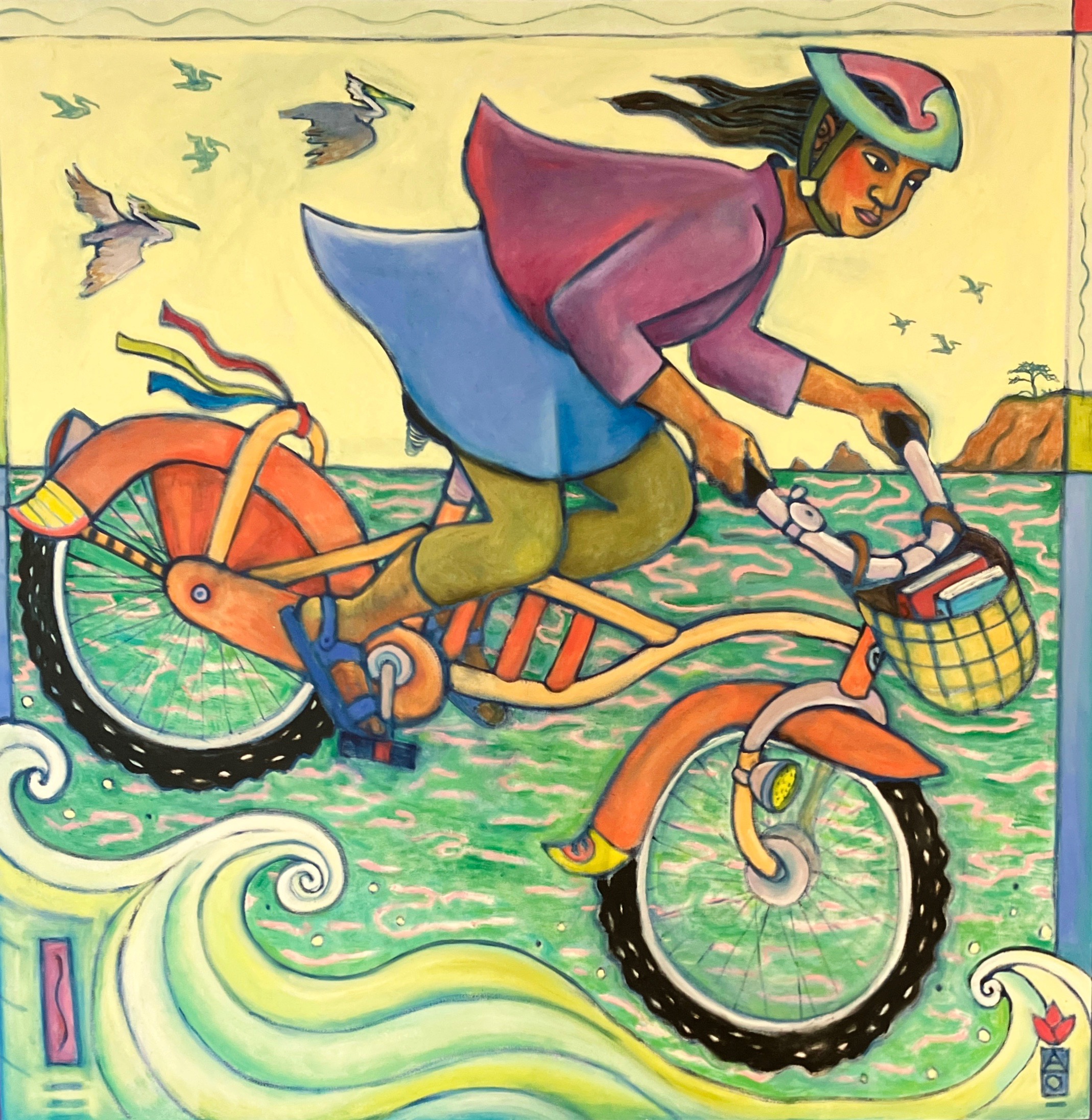
Many thanks to each of the contributors to this issue, for what they’ve exposed, and especially to featured artist Anna Oneglia for sharing her visual art with us. Her images open the way to a different seeing and display a great place of imagination.
Stay tuned. Stay safe.
from the Ether,
Sally Ashton
Editor-in-Chief
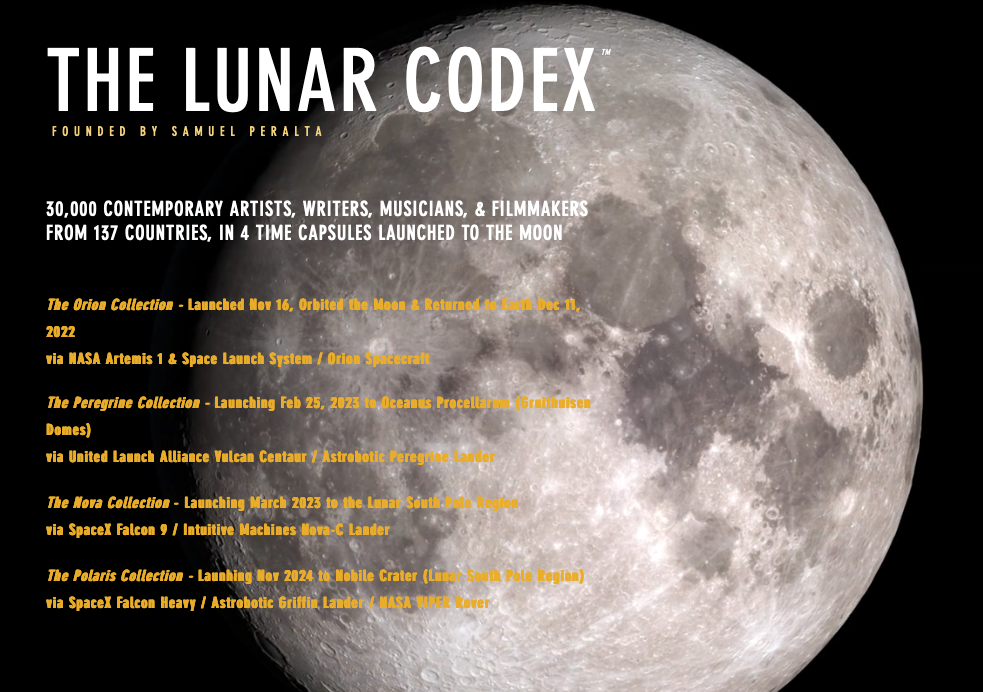
Thanks to editor Joyce Brinkman, my poem “4.6 Billion Years” will be headed to the Moon in 2024 in The Polaris Trilogy anthology as part of the Lunar Codex project! And yes, I’m both starry-eyed and over the Moon! Yes, THAT Moon….
Don’t tell me the moon is shining . . .
In a letter to his brother, Franz Kafka passed along some memorable writing advice, later paraphrased in an apocryphal quote, “Don’t tell me the moon is shining, show me the glint of moonlight on broken glass.” Don’t tell me . . . show me. Maybe you recognize the almost tiresome workshop aphorism embedded, “Show, don’t tell,” albeit more evocatively phrased.
Apart from its instructive value, Kafka’s quote especially resonates with me these days when the cultural mood feels enduringly dark. How I often long for some light, whether that light be good news, fresh perspective, a new direction, or the very real relief of a light heart. Show me some light—please? Perhaps what Italo Calvino referred to as “Lightness” in his essential, Six Memos for the New Millennium, lightness as opposed to heaviness, the weight of the world, of our past, and importantly in our writing. He described it as “the search for lightness as a reaction to the weight of living.” Writers often examine that weight, and in doing so lighten if not lift it for us by giving us greater understanding and empathy.
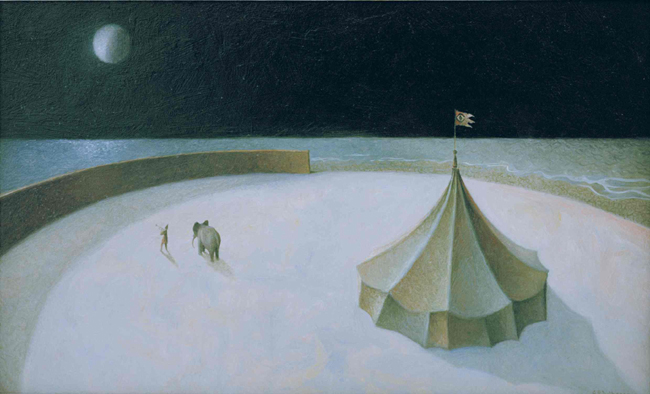
And what could be more weightless, more transcendent than the light of the moon? Which brings me, first, to the luminous image topping this page, one of featured artist Gian Paolo Dulbecco’s many wonderfully mysterious paintings—full of lightness, if you will—found on his website and gracing the pages of this, our Fall 2022 Craft Essay issue.
(more…)Here’s the Buzz from The Hive, a lively interview featured on KSQD Radio with me and Dion O’Reilly. There we first talk about a poem that’s influenced me recently, “The City Limits” by A. R. Ammons from his Selected Poems, reprinted below from poets.org. In the interview, I refer to the poem as “The Radiance,” I believe in error. I guess that’s what stuck out to me. In any case, terrific poem, and, if you have time, I think a quite-nice interview between the two of us.
I hope you too find something uplifting in this poem.
A. R. Ammons – 1926-2001
When you consider the radiance, that it does not withhold
itself but pours its abundance without selection into every
nook and cranny not overhung or hidden; when you consider

that birds' bones make no awful noise against the light but
lie low in the light as in a high testimony; when you consider
the radiance, that it will look into the guiltiest

swervings of the weaving heart and bear itself upon them,
not flinching into disguise or darkening; when you consider
the abundance of such resource as illuminates the glow-blue

bodies and gold-skeined wings of flies swarming the dumped
guts of a natural slaughter or the coil of shit and in no
way winces from its storms of generosity; when you consider

that air or vacuum, snow or shale, squid or wolf, rose or lichen,
each is accepted into as much light as it will take, then
the heart moves roomier, the man stands and looks about, the

leaf does not increase itself above the grass, and the dark
work of the deepest cells is of a tune with May bushes
and fear lit by the breadth of such calmly turns to praise.

 A Muse Bouche